Author: Walé

African Folklore Stories for Children Explained

African folklore stories for children stay with young readers long after the last page. They are windows into rich oral traditions that shape communities across Africa. These traditions carry wisdom about courage, kindness, and our relationship with nature. If you are a parent seeking books, or an educator building a more inclusive list, this guide addresses both. It explains why African folklore deserves a central place in every child’s reading life.


What makes African folklore so powerful for children?

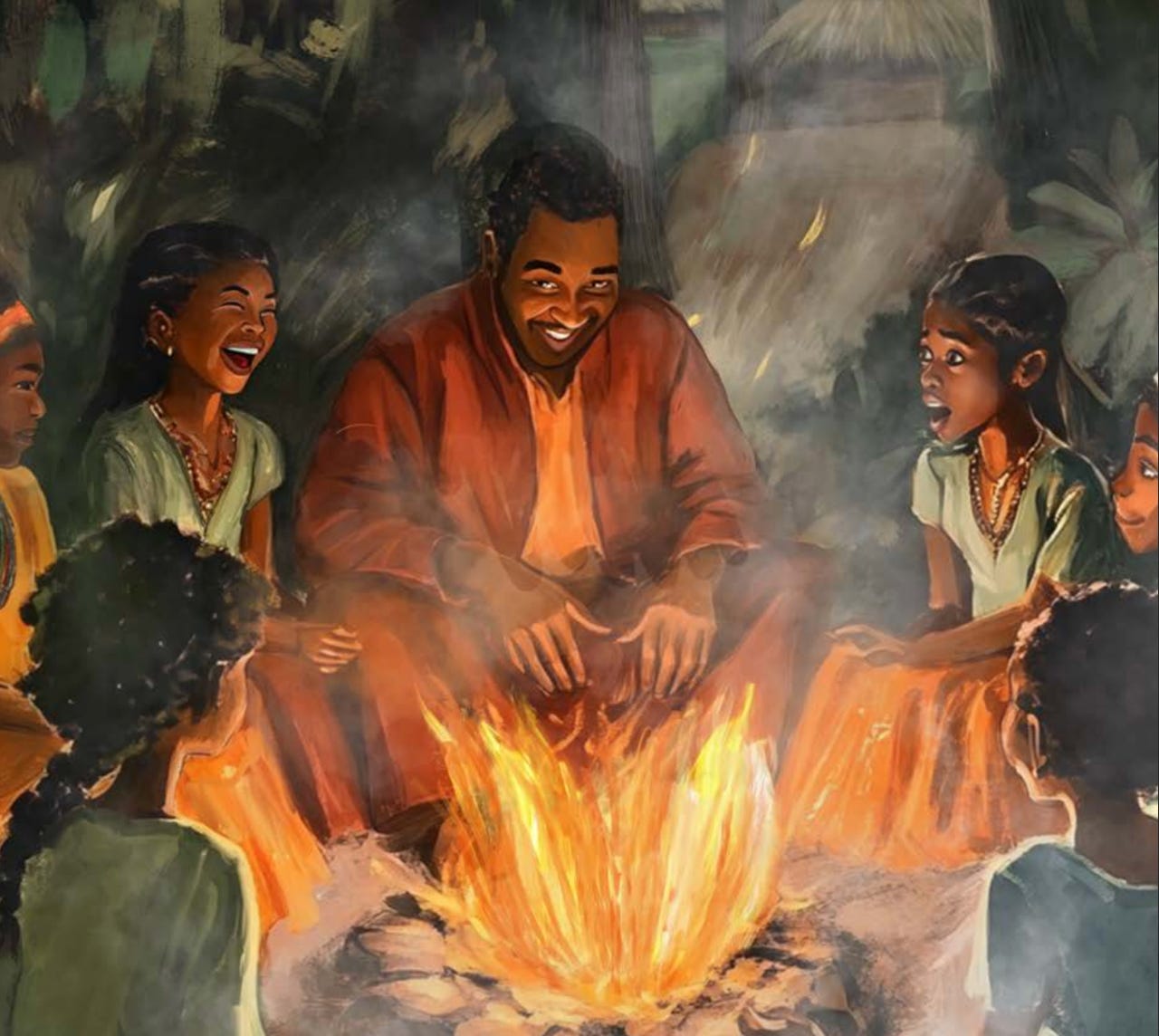
African folklore offers moral lessons, vivid characters, and nature-based wisdom. They speak directly to children fro as young as 8 years and above. These stories were never written down first. They were spoken aloud around fires, passed from grandparent to grandchild, and shaped over generations to carry the values a community held most dear. That oral energy, that sense of being told something important, still comes through on the page today.

Unlike a lot of conventional children’s literature, African folklore introduces young readers to worldviews and cultural perspectives they may never encounter elsewhere. A child who reads about Anansi the spider or the patient tortoise is not just enjoying a good story. They are being invited into a different way of seeing the world, one that values cleverness over brute strength, community over individual ambition, and respect for the natural world as a daily practice rather than an abstract idea.

The characters in these tales are rarely perfect. They make mistakes, face real consequences, and sometimes fail before they succeed. That honesty is part of what makes African folklore so relatable for children. Young readers see themselves in these flawed, striving characters, and they come away with a sense that wisdom is something you earn through experience, not something you are simply handed.


How folklore and music work together in children’s storytelling

When original music is woven into a story, reading becomes something closer to a full experience. The music sets the mood before a single word is read, signals emotional shifts within the narrative, and leaves a lasting impression that a text alone often cannot achieve. For children especially, this combination is remarkably powerful.

The Golden Threads of Inspiration series, published by Golden Thread Tales, pairs each tale with a bespoke musical score created specifically for that story. The music is not background noise. It is built to mirror the rhythm and emotional tone of the narrative, rising with tension and settling into warmth at moments of resolution. Children who listen and read at the same time are engaging with the story on multiple levels at once.

Research in child development consistently points to the benefits of combining storytelling with music. Studies suggest this approach supports memory retention, strengthens language acquisition, and helps children build a richer emotional vocabulary. When a child can feel what a character is feeling, not just understand it intellectually, the lessons within the story take root far more deeply.

Why multi-sensory stories support early learning

Multi-sensory experiences engage multiple areas of the brain at the same time, making stories more memorable and far more meaningful. A child who hears music that matches the emotion of a scene is not just processing words. They are connecting language to feeling in real time, which is exactly how emotional literacy develops.

When children encounter music that rises as a character faces danger and softens as resolution arrives, they are learning to read emotional cues in a context that feels safe and enjoyable. Over time, that skill transfers outward into their everyday relationships, helping them recognise and respond to the emotions of others with greater sensitivity and care.


Character-building themes woven into African tales

Many African folklore traditions centre on values such as honesty, perseverance, kindness, and respect for both elders and the environment. What makes these stories so effective is that they never lecture. The values are not spelled out in a moral at the end of every chapter. They are revealed through the choices characters make, the consequences that follow, and the way a community responds to both success and failure.

Child psychologists and educators have long noted that stories which model values in action are far more effective at shaping character than direct instruction. A child who watches a fictional character struggle with a difficult choice and live with the outcome absorbs something genuine about cause and effect in human relationships. That experience sticks with them in a way that a list of rules simply does not.

The Golden Threads of Inspiration series is built around this understanding. Each story in the collection brings a different value to the surface, not by explaining it but by letting children feel its weight through a narrative that genuinely entertains.

What values can children learn from African folklore?

Tales rooted in African tradition often explore the tension between what an individual wants and what a community needs. These stories show children, in vivid and memorable ways, how their choices ripple outward and affect the people around them. That lesson, simple as it sounds, is one of the most important any young person can absorb.

Nature-based wisdom in African folklore adds another layer entirely. Many stories teach children to observe the natural world with curiosity and care, encouraging a sense of environmental responsibility that starts not with facts about climate change but with genuine affection for the living world. A child who loves the baobab tree in a story is already on their way to caring about real trees.


Why educators and families recommend folklore-based reading

Teachers are increasingly aware of the value of culturally diverse literature in the classroom. When every child can see their heritage reflected in the books they read, the entire class benefits. Inclusive reading lists open up conversations about identity, similarity, and difference in ways that feel natural rather than forced.

Families who read African folklore together often report that the stories spark conversations they did not expect. Questions about fairness, loyalty, and what it means to be brave come up naturally after a good story in a way they rarely do at the dinner table. That is the quiet power of meaningful children’s literature. It creates the conditions for honest conversation without anyone having to force it.

The Golden Threads of Inspiration series has earned recognition from educators for the way it balances entertainment with moral depth. These are stories that work on a Saturday morning at home and in a Year 4 classroom on a Tuesday afternoon, because the themes are universal even when the cultural context is specific.

How to introduce African folklore to children at home

Start with shorter tales that introduce one character or one clear moral theme. This gives children the space to absorb what they have heard before moving on to something more complex. There is no need to rush through a series or explain everything at once. Let the story breathe.

Try listening to the accompanying musical score together before you begin reading. This sets the emotional tone and helps younger readers arrive at the narrative already engaged, rather than warming up slowly as the pages turn. Think of it the way you might put on a film score before watching a movie. The atmosphere arrives first.

After reading, ask open questions rather than comprehension questions. “What would you have done differently?” or “Why do you think the tortoise didn’t just walk away?” are far more interesting to a child than “What happened at the end?” These conversations are where the real learning happens, and they tend to go further than parents expect.


The role of nature’s wisdom in African storytelling traditions

In many African oral traditions, animals, plants, and natural phenomena are not just background detail. They are the main characters, and they carry the full weight of human experience. The spider schemes. The lion misjudges his own strength. The river carries secrets between villages. Nature in these stories is alive, aware, and deeply woven into the moral fabric of the narrative.

This approach teaches children something that is difficult to convey through textbooks alone: that the natural world deserves to be observed, respected, and understood. A child who has read stories where the behaviour of animals reflects human choices will approach nature with a different kind of attention. They will look at a tortoise and think of patience. They will look at a baobab and think of resilience.

Stories featuring Anansi the spider, the clever tortoise, or the powerful lion carry layered meanings that shift and deepen as children grow older. A seven-year-old might love the plot. A twelve-year-old reading the same story might notice the social commentary. That capacity to be revisited and reinterpreted is one of the hallmarks of genuinely great children’s literature.

Which animals and natural symbols appear most in African folklore?

The tortoise is one of the most enduring figures in African folklore across multiple regions and traditions. Slow, deliberate, and extraordinarily clever, the tortoise regularly outwits animals many times its size, teaching children that wisdom and patience are more powerful than strength or speed.

The baobab tree appears across stories from sub-Saharan Africa as a symbol of resilience, ancient knowledge, and community. These trees can live for thousands of years, and their presence in folklore reflects a deep cultural understanding that some things are worth protecting across many generations.

Birds such as the hornbill and the weaver appear frequently as symbols of communication and cooperation. These are the characters who listen carefully, carry messages faithfully, and remind younger characters, and young readers, that how we speak to one another matters enormously.


Growing with your child through stories

One of the most valuable qualities of a well-crafted children’s book is its ability to reveal new meaning at different stages of a child’s life. A story that made a child laugh at age eight might make the same child think carefully about identity at age thirteen. That depth is not accidental. It is the result of stories built on genuinely complex human themes rather than surface-level plot.

The Golden Threads of Inspiration series is designed with this in mind. The themes within each story are rich enough to resonate with a young adult as much as they do with an eight-year-old, even if the two readers take something entirely different away from the same pages. That is the hallmark of storytelling with real lasting power.

Revisiting a beloved story as a child grows older is one of the most rewarding things a family can do together. The child changes, and so does their relationship with the characters they already love. That continuity, that sense of a story growing alongside you, is something African folklore stories for children have always offered, and what Golden Thread Tales brings forward into a new generation.


Frequently asked questions

What age group is African folklore storytelling most suitable for?

African folklore stories are most suitable for children of all ages, though many tales work well for younger children when read aloud by a parent or carer. The Golden Threads of Inspiration series is specifically designed for readers aged 8 and up, with themes complex enough to remain engaging into young adulthood and even for adults.

How does original music enhance the storytelling experience for children?

Original music sets the emotional tone of a story before a single word is read. When music is built to match the mood and rhythm of a narrative, it helps children connect language to feeling more naturally. Research in child development suggests this approach supports memory retention, language acquisition, and emotional literacy.

Are African folklore stories appropriate for children who are not of African heritage?

Absolutely. The themes explored in African folklore, such as courage, fairness, community, and respect for nature, are universal. Children from any background gain enormous value from encountering different cultural perspectives. Exposure to diverse stories builds empathy and broadens a child’s understanding of the shared human experience.

What character values are most commonly explored in African folklore for children?

African folklore most often explores honesty, perseverance, kindness, respect for elders, and responsibility to the community. These values are not stated directly but revealed through character choices and consequences, making them far more likely to be absorbed and remembered by young readers over time.

How can parents use folklore stories to start meaningful conversations with their children?

After reading, ask open-ended questions such as “What would you have done?” or “Why do you think that character made that choice?” Avoid simple comprehension questions and focus on feelings, decisions, and consequences. These conversations tend to go further than expected and give children a safe space to think aloud about complex ideas.

Is there a difference between African folklore from different regions of the continent?

Yes, significantly. Africa is a vast continent with over 3,000 distinct ethnic groups and hundreds of oral storytelling traditions. West African tales often feature Anansi the spider, while southern African stories may centre on the baobab tree or different animal characters. Each regional tradition carries its own symbols, rhythms, and cultural values.

How does nature-based wisdom in African stories support environmental education?

Nature-based storytelling builds an emotional connection to the natural world before any facts or data are introduced. When children care about a fictional tree or animal, they are more likely to care about real ones. African folklore teaches environmental awareness through affection and respect rather than fear, which tends to create a more lasting and genuine sense of stewardship.


Golden Thread Tales brings African folklore stories for children to life. The Golden Threads of Inspiration series blends original music scores with timeless tales of character, courage, and nature’s wisdom. Recommended by educators and loved by families.

What If the Monster Was Just a Shadow?

5 Lessons From the Forest That Can Help You Overcome Fear and Connect with Yourself

There’s a moment in every great story when the protagonist is alone, unsure, and facing something unknown — not outside, but within.

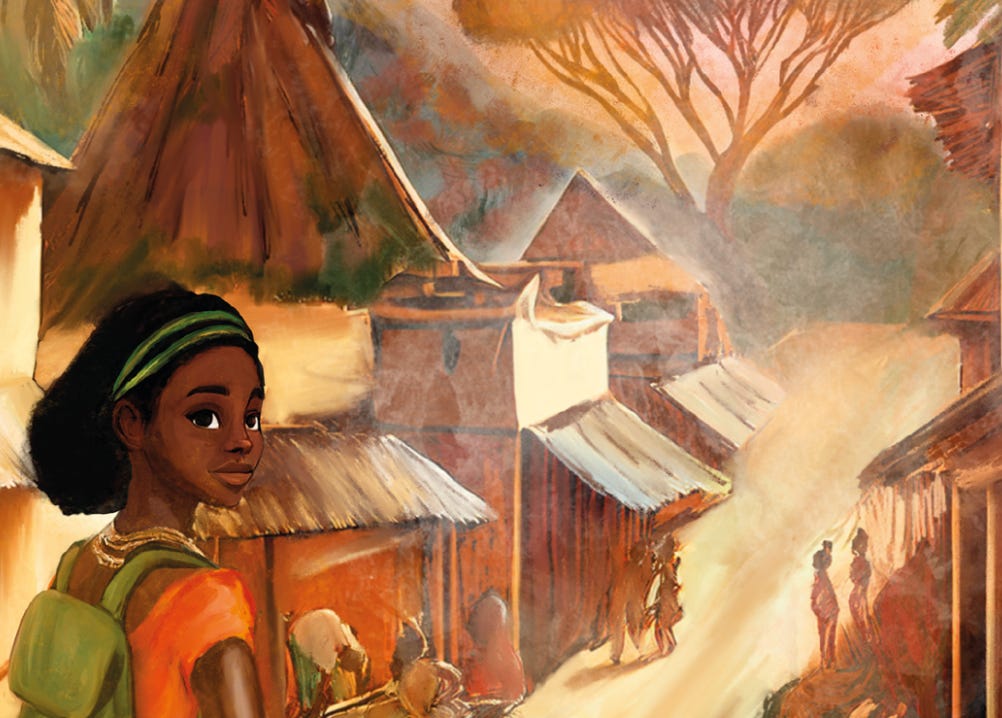
In Night in a Wood Cabin, a poetic and suspenseful coming-of-age tale rooted in the ancient storytelling traditions of Ilé-Ifẹ̀, young Nia enters a forest in search of wonder, only to confront the shadows of her own imagination.

But what if those shadows weren’t monsters at all?

What if they were simply echoes of old stories we inherited, stories we outgrew, but never questioned?

Fear has a way of making everything seem bigger, darker, and more perilous than it actually is. But what if the things we fear most are only shadows and illusions that take shape only when we stop trusting ourselves?

In this article, we explore five key lessons from the forest: reflections that echo far beyond the pages of a children’s tale. Whether you’re navigating fear as a parent, a young professional, or simply someone craving clarity in uncertain times, these insights invite you to pause, breathe, and see things differently.

1. The Forest Isn’t the Enemy — Your Thoughts Might Be

We often assign danger to unfamiliar spaces simply because we can’t predict what lies ahead. In the book, Nia enters the forest full of curiosity… until night falls. Suddenly, the same branches that danced in the sunlight began to scratch against her imagination. Every sound becomes a threat. Every shadow, a monster.

But what changed wasn’t the forest; it was her perception.

“Maybe the shadows aren’t monsters,” Nia whispers. “Maybe they’re just shadows… and what harm has a shadow ever caused anyone?”

Lesson: The unknown isn’t always unsafe. Sometimes it’s our unexamined fears that make it feel that way. When we explore rather than retreat, we often find clarity and calm hiding just behind the uncertainty.


2. Curiosity Can Be a Compass

Before fear crept in, it was curiosity that led Nia into the woods — not recklessness, but a quiet longing for something more. That desire to explore, to learn, to reach beyond the boundaries of the familiar, is something we all had once. But as we grow older, the world teaches us caution, often at the expense of curiosity.

What if our inner compass isn’t broken — just buried?

Lesson: Curiosity is not the opposite of fear. It’s the remedy. If we lead with wonder instead of worry, we shift our focus from what could go wrong to what we might discover.


3. What You Focus On Expands

One of the most memorable scenes in Night in a Wood Cabin features a wise merchant showing Nia how attention shapes perception. He asks her to focus on green leaves, green vines, and green moss, and then asks her to recall anything red. She can’t. But when she shifts her awareness, red suddenly appears everywhere: berries, blossoms, rust-coloured bark.

What we look for, we find. What we fear, we amplify. What we believe, we often reinforce without even realising.

“When we only look for shadows,” the merchant tells her, “we forget that there is colour everywhere, if only we choose to see it.”

Lesson: Choose your focus with intention. Your mind is powerful enough to transform shadows into monsters, but it can also turn uncertainty into opportunity.


4. Stories Shape Us — So Choose Yours Wisely

Throughout the book, Nia wrestles not only with the forest, but with the stories she’s grown up hearing: tales of werewolves, shape-shifters, and eerie creatures that haunt the woods at night. These myths weren’t meant to trap her, but to teach her a lesson. Yet stories, when left unchallenged, can become cages.

Who told you the world is dangerous?Who decided you weren’t brave enough?Who said fear must always win?

Lesson: You don’t need to abandon your stories — but you must rewrite the ones that no longer serve you. The power of storytelling isn’t just in what it teaches others, but in how it redefines us.


5. Courage Doesn’t Mean You’re Not Afraid — It Means You Go Anyway

One of the most poignant moments in the story is not when Nia defeats a monster, but when she dreams and realises there was no monster at all. There was only her wrestling with her own fear, reshaping her own perception, reclaiming her own power.

“The brighter the light of her torch shone, the smaller the dragon got, until it completely dwindled in size and fluttered away like a fly.”

Sometimes, fear is just the mind’s way of asking us to pay attention. Courage doesn’t silence fear; it reframes it. Gaining a better understanding of a situation, or of yourself, is often the first heroic act.

Lesson: Bravery isn’t always a grand gesture. Sometimes, it’s simply a matter of choosing to stay with discomfort long enough to understand it.


Final Reflection — The Forest Within Us All

The most important journey Nia takes isn’t through the forest; it’s the journey inward. And perhaps, that’s the journey we’re all on. Night in a Wood Cabin whispers a powerful truth: fear is natural, but the scenarios it presents are not final.

In Night in a Wood Cabin, children are entertained, but adults are invited to remember: the biggest shadows often come from the smallest fears left unexplored. If we continue to pass those fears down through generations in our parenting, leadership, and lifestyle, we perpetuate the illusion of monsters.

The stories we inherit are not the end of the story.
The monsters we fear are not always what they appear to be.
And sometimes, the shadows we run from… are our own.

What if the monster isn’t real at all, but a shadow and a reminder that it’s time to turn on your own light?

Ready to explore your own shadows?

Night in a Wood Cabin by Walé Akíngbadé will be available for purchase from April 2025 on AmazonWaterstones, and Foyles.


🎵 Bonus: Each chapter in the book is accompanied by a gentle instrumental track — a musical reflection to help you digest each lesson at a deeper level. You can scan the QR code at the back of the book or visit goldenthreadtales.com to listen.

A Tale of Three Brothers and a Hundred Coins

The eight-chapter original tale, titled Sefu’s Garden, continues the journey begun in Journey to Ọjà, following a young farmer named Sefu who must choose between immediate wealth and the slow, yet rewarding, work of cultivation.

When a travelling merchant offers to buy his three plots for a sum beyond his dreams, Sefu imagines a new life in the bustling market town of Ọjà. His father, Obi, and his older brother, Jabari, remind him that some treasures cannot be bought. Their counsel, along with the quiet discipline of his garden, form the heart of this sequel.

A Parable of Three Brothers

One morning after the merchant’s offer, Sefu walked between rows of okra and beans. The soil, damp and dark, clung to his fingers. The thought of the merchant’s glittering coins tugged at his mind. Jabari joined the young farmer beneath a pawpaw tree and shared a story, “There were once three brothers, each given a hundred gold coins.”

The first brother poured his inheritance onto a woven mat and watched the coins catch the morning light. The metallic chime made his heart race. He bought the finest horse in the market, its coat shining like polished ebony, and ordered a tailor to sew him robes of imported cloth. He filled his courtyard with friends, musicians, and laughter.

The scent of roasting goat, fragrant rice, and palm wine drifted through the night. With each purchase, a coin rang on a counter, and the purse at his waist grew lighter. At first, he shrugged and said, “Life is too short,” revelling in the applause of neighbours. Weeks later, he found himself staring at an empty pouch and a quiet compound. He went to his brother’s houses barefoot, dust clinging to his ankles, and knocked softly. Shame warmed his cheeks when he whispered, “Can you spare a coin?” The wind whistled through his straw-thin plans.

Sefu winced. “He must have felt hollow,” he murmured.

Jabari nodded. “He did.”

The second brother untied his pouch in the privacy of his hut. He sat by the light of a low-lit lamp and spread the coins in neat rows. He drew lines in the earth, dividing them by the seasons and years he hoped to live. He placed each small stack into clay pots, sealed and buried them beneath floorboards and sleeping mats. He ate millet porridge and dried fish, never sweetening his tea, constantly reminding himself that his future depended on these coins. When the first brother came, gaunt and desperate, the second brother’s fingers twitched toward his hidden stores, then clenched. “My coins are accounted for,” he said, eyes darting to the floor. He felt safe surrounded by his hoarded wealth, yet the safety was as stiff as his mat. He lived in a house of sticks; upright, but creaking under every gust of wind.

“The second brother sounds careful,” Sefu observed, “but also alone.”

“Yes,” Jabari replied. “He was so afraid of hunger that he tasted nothing else.”

The third brother walked out into the morning with his pouch and considered the fields beyond the village. Half of his coins he entrusted to the banker, watching the clerk’s pen scratch his name in the ledger. It felt like planting seeds he would not see for a long time. With the other half, he bought a small plot of land with dark, soft soil. He bent his back to the earth, pressing cowpea seeds into furrows with calloused fingers. Under the sun, he sweated, his tongue dry, yet his heart beat steady. He slept soundly and woke before dawn, eager to see green shoots breaking through the soil.

Seasons passed. His farm became a patchwork of millet, maize, and groundnuts. He sold some harvest, saved some, and always set aside a handful of seeds for the next planting. When his shoes wore through, he mended them and laughed, telling himself, “Life is short, but so are these stitches.” When he longed for a carved drum or a brightly dyed cloth, he waited for the harvest, then walked to the market with a basket of produce and coins earned from his crops. When the first brother arrived, thin and ashamed, asking for coins, he gave him a hoe instead and said, “Your hands are stronger than you know.” When the second brother arrived with a clay pot of coins, he smiled. “Let us put your treasure to work. The soil will teach you patience, and the bank’s interest will teach you trust.”

Sefu could almost see the third brother’s calloused hands and the way the sun glinted on the banker’s ink. “He must have felt proud,” he said, “but also tired.”

“He felt content,” Jabari replied, “and he learnt that tiredness from honest work feels different from exhaustion caused by worry or regret.

Subtext and Invitation

As Jabari’s story unfolds, Sefu weighs the merchant’s offer against the lessons of the parable. He thinks about the first brother’s empty hands and the second’s clenched fists, and he imagines the third brother kneeling in a field, planting seeds with patience. The tale of three brothers sits with him like a seed, ready to sprout into action. Will Sefu chase the glitter of instant wealth, hoard his treasure, or cultivate a foundation that endures?

Sefu’s Garden, the sequel to the soon-to-be-released Journey to Ọjà, invites you to follow a young man as he navigates the tension between immediate reward and lasting fulfilment. Jabari’s parable offers guidance, but Sefu’s decision and the consequences that follow unfold only within the pages of the book.

silhouette of man standing on hill during sunset

The Journey of Self-Discovery: Lessons from ‘The Tree That Found Its Roots’

Understanding Self-Discovery

Self-discovery is a profound and often transformative journey that involves exploring one’s true self, values, beliefs, and desires. This intricate process is not merely an introspective activity; it is essential for personal growth and emotional well-being. Through self-discovery, individuals gain deeper insights into their motivations and actions, facilitating a more authentic and fulfilling life. It encourages individuals to confront their fears, embrace their strengths, and recognise their weaknesses, thereby allowing them to foster a balanced sense of self.

In the allegorical narrative of ‘The Tree That Found Its Roots’, the protagonist’s quest for identity mirrors the universal journey of self-discovery. Just as the tree seeks its roots to understand its place in the forest, individuals embark on their own path toward uncovering their essence. This metaphor beautifully encapsulates the essence of how self-discovery plays a pivotal role in nurturing one’s understanding of life. The journey emphasises that without understanding oneself, one may feel lost and disconnected from their surroundings, akin to a tree without roots.

Moreover, the importance of self-discovery extends beyond personal contentment; it enhances relationships and fosters empathy toward others. By understanding one’s own emotional landscape, individuals can cultivate more meaningful connections with those around them. This signifies that the path of self-discovery is not only about self-exploration but also about fostering a greater understanding of humanity at large.

Ultimately, embracing the journey of self-discovery can lead to a more enriched and satisfying existence. By recognising parallels in narratives such as ‘The Tree That Found Its Roots’, individuals can find inspiration in their shared experiences, reminding them that the pursuit of self-awareness is a vital aspect of the human condition.

The Lost Girl and Her Journey

In “The Tree That Found Its Roots,” the character of the lost girl serves as a profound representation of youthful exploration and the tumultuous path of self-discovery. Initially, she finds herself engulfed in feelings of isolation and confusion, grappling with her identity in a world that seems vast and unwelcoming. Her journey begins with a quest for belonging and understanding, fueled by an internal struggle to comprehend her own needs and values amidst the cacophony of external expectations.

As the narrative unfolds, the lost girl encounters various characters along her path, each symbolising different obstacles and learning experiences. These interactions reflect her internal conflict, forcing her to confront her fears, insecurities, and desires. For instance, a wise elder she meets offers insights that challenge her preconceived notions about herself and her place in the world. Through these encounters, she gains perspective, gradually uncovering her strengths and vulnerabilities.

Throughout her journey, the girl is not merely running from her past or the shadows of her doubts; she is actively seeking to understand them. Each challenge she faces contributes to her growth, emphasising the idea that obstacles can serve as catalysts for self-discovery. Whether it is the friendships that teach her about trust and companionship or the trials that test her resilience, every experience is a vital component of her evolution.

This transformation from confusion to clarity is central to her narrative arc. By the end of her journey, the lost girl learns that embracing her authentic self is paramount. Her story resonates with readers, showcasing that the quest for identity is often riddled with difficulties but is ultimately a rewarding endeavor that leads to profound personal development.

Embracing Help and Trusting the Process

In the journey of self-discovery, seeking help is often portrayed as a significant milestone that can lead to profound personal transformation. The narrative of ‘The Tree That Found Its Roots’ emphasises that the paths we traverse are rarely solitary. Engaging with others provides not only support but also diverse perspectives that can enrich our understanding of ourselves. The interactions of the lost girl in the story are emblematic of this truth; they highlight the essential role that relationships play in fostering personal growth.

Trusting the process of self-discovery requires one to embrace vulnerability. It is through openness that individuals allow others to assist them, which can sometimes be a challenging leap of faith. When the lost girl allows herself to be vulnerable, she finds connections that help illuminate her path. This act of trusting others becomes a catalyst for growth, revealing insights that may have otherwise remained concealed. Each character she encounters contributes to her journey, affirming that seeking guidance is not a sign of weakness but rather an acknowledgement of our shared human experience.

The importance of fostering these connections cannot be overstated. Relationships built on trust can serve as nurturing environments where individuals feel safe to explore their identities and confront their insecurities. This relational aspect of self-discovery invites individuals to learn from each other, creating a mosaic of shared experiences. The theme resonates throughout the story, illustrating that learning to rely on others can lead to unexpected revelations about oneself and the world at large.

Ultimately, embracing help and trusting the journey is a vital lesson that ‘The Tree That Found Its Roots’ imparts. It demonstrates that when we open ourselves up to guidance, we not only deepen our connections with others, but we also uncover the layers of our own identities, facilitating a richer and more profound journey of self-exploration.

Sharing Successes and Building Connections

Embracing the journey of self-discovery often culminates in significant milestones that are worthy of acknowledgment and celebration. Recognising and sharing these successes is not merely a personal triumph; it serves as a bridge fostering connections with others. Throughout ‘The Tree That Found Its Roots’, we witness how the protagonist’s experiences evolve into narratives that resonate with those around her. When individuals openly share their journeys, it opens avenues for conversation, creates an atmosphere of trust, and cultivates a sense of community. Each story told contributes to a collective tapestry of experiences, illustrating that personal growth is deeply intertwined with the larger human experience.

As the girl shares her triumphs, she inadvertently invites others to reflect on their own paths of self-discovery. The act of storytelling has an inherent power to inspire empathy and understanding, transforming individual accomplishments into shared victories. For instance, her willingness to recount challenges faced along her journey highlights not only her resilience but also encourages others to confront and embrace their battles. This reciprocal exchange solidifies interpersonal connections and uplifts communal spirits, thereby enriching the environment in which everyone operates.

Moreover, successful sharing creates a safe space for those who may find themselves still grappling with their journeys. By witnessing another’s path toward resolution and fulfilment, they gain hope and courage to pursue their own aspirations. Such connections act as reminders that self-discovery is not solely an internal struggle but often necessitates external support and encouragement. As connections deepen through shared stories, the understanding emerges that individuals are not alone in their quests. Ultimately, the act of sharing successes illuminates the beauty of human interconnectedness and reinforces that every journey is part of a larger narrative we all contribute to.